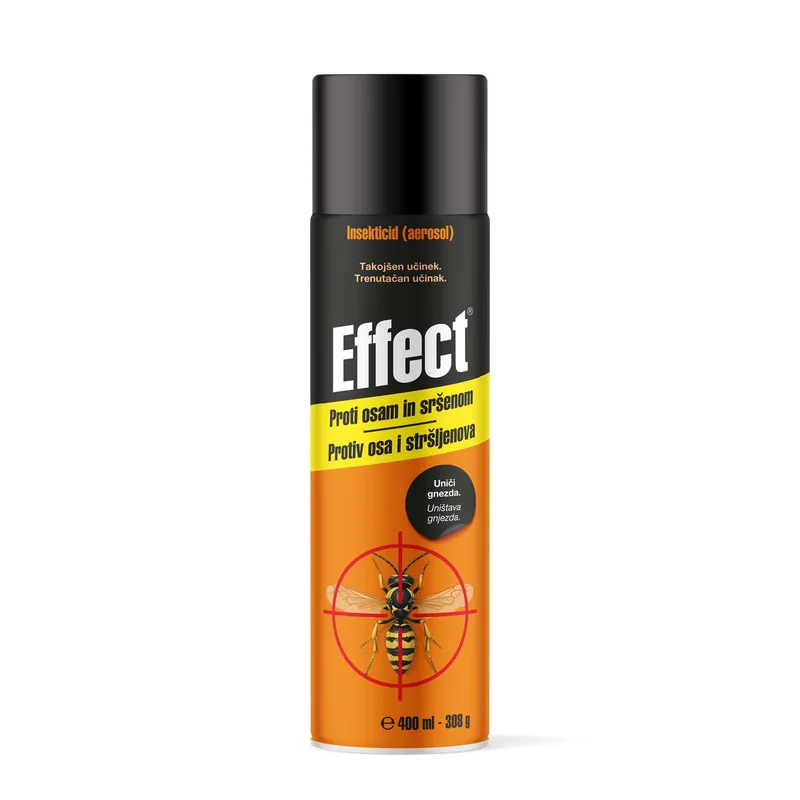
How to Remove a Wasp or Hornet Nest Safely
Wasp and hornet nests close to the home can present a serious risk, particularly when disturbed. Learn how to recognise them, when removal is necessary and how to approach treatment as safely as possible.
.png)
Hornets are the largest social wasps found in Slovenia and play an important role in nature. However, nests close to the home may pose a safety risk. Although hornets are generally less aggressive than wasps, they defend their nests decisively. If hornets appear, it is important to act carefully and use suitable solutions.
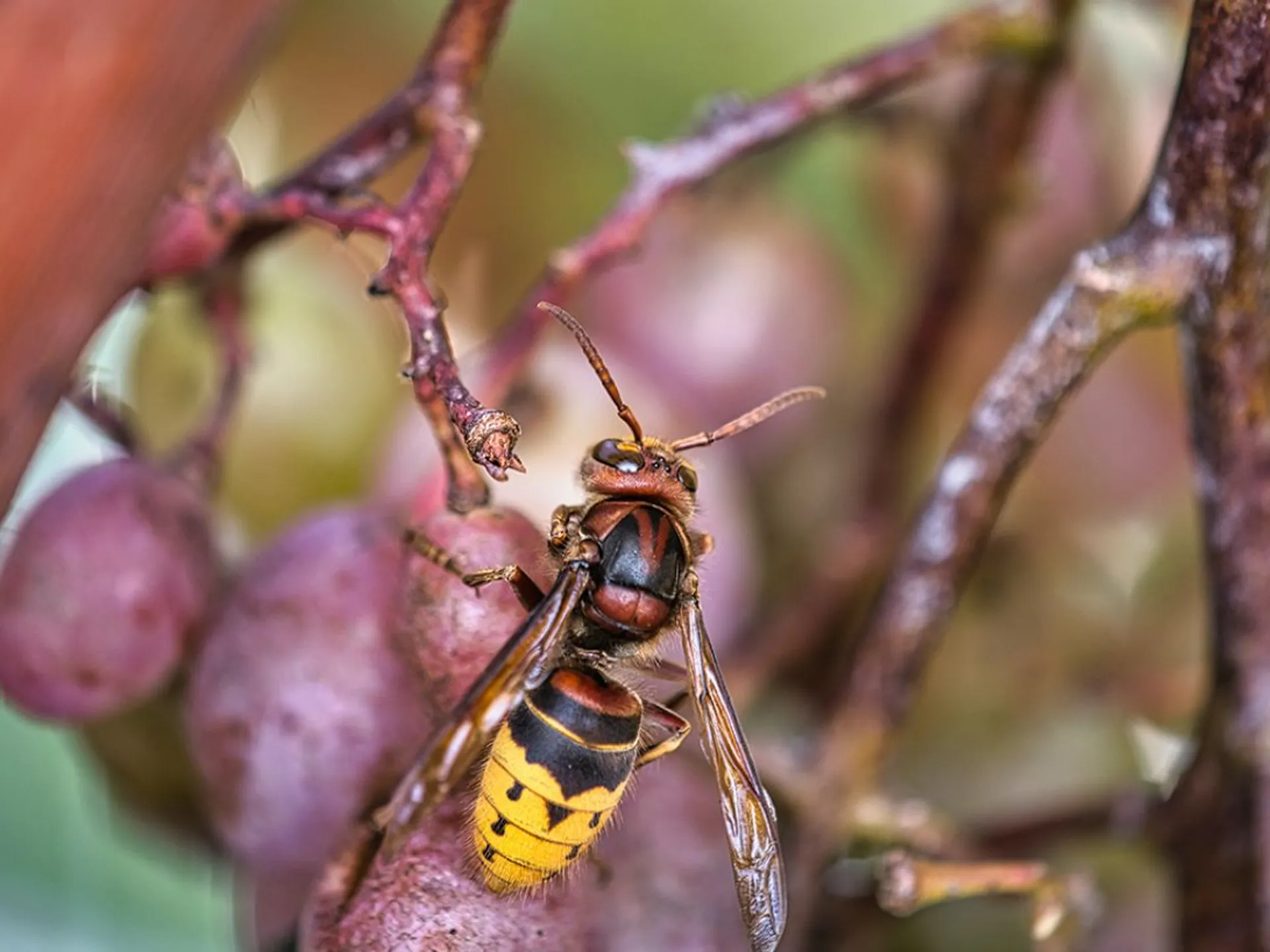
Hornets are most commonly seen from late spring until autumn, when they build nests and search for food. They are often found near forests, orchards and gardens and in attics, sheds and other quiet locations where a colony can develop safely.
Although their appearance often causes fear, hornets are generally not aggressive without a reason. They become dangerous mainly when people approach or disturb their nest.
Hornets search for suitable nesting sites and sufficient food for the developing colony. In spring, a fertilised queen begins building a new nest, which gradually increases in size throughout the summer.
Their presence is most commonly encouraged by:
Hornets most commonly nest in tree hollows, attics, garden sheds, beneath eaves or in other sheltered spaces.
Hornets play an important role in regulating other insect populations, but their proximity may pose a risk to people. They defend their nests decisively and disturbing a colony may result in multiple stings.
A hornet sting may cause:
People who are allergic to hymenopteran stings may experience a serious allergic reaction requiring immediate medical attention.
If a nest is located near an entrance, terrace or another frequently used area, timely action is recommended.
Hornets choose quiet and sheltered nesting sites with little disturbance and sufficient food nearby.
They are most commonly found:
Individual hornets are also frequently seen near flowering plants, fruit trees or locations where they hunt other insects.
An individual hornet near the home does not necessarily indicate that a nest is nearby. However, if hornets are repeatedly seen in the same place or regularly fly in a particular direction, the colony is likely to be close.
The most common signs of hornet activity are:
If you see a nest or a larger number of hornets in one location, do not approach it or attempt to remove it mechanically.
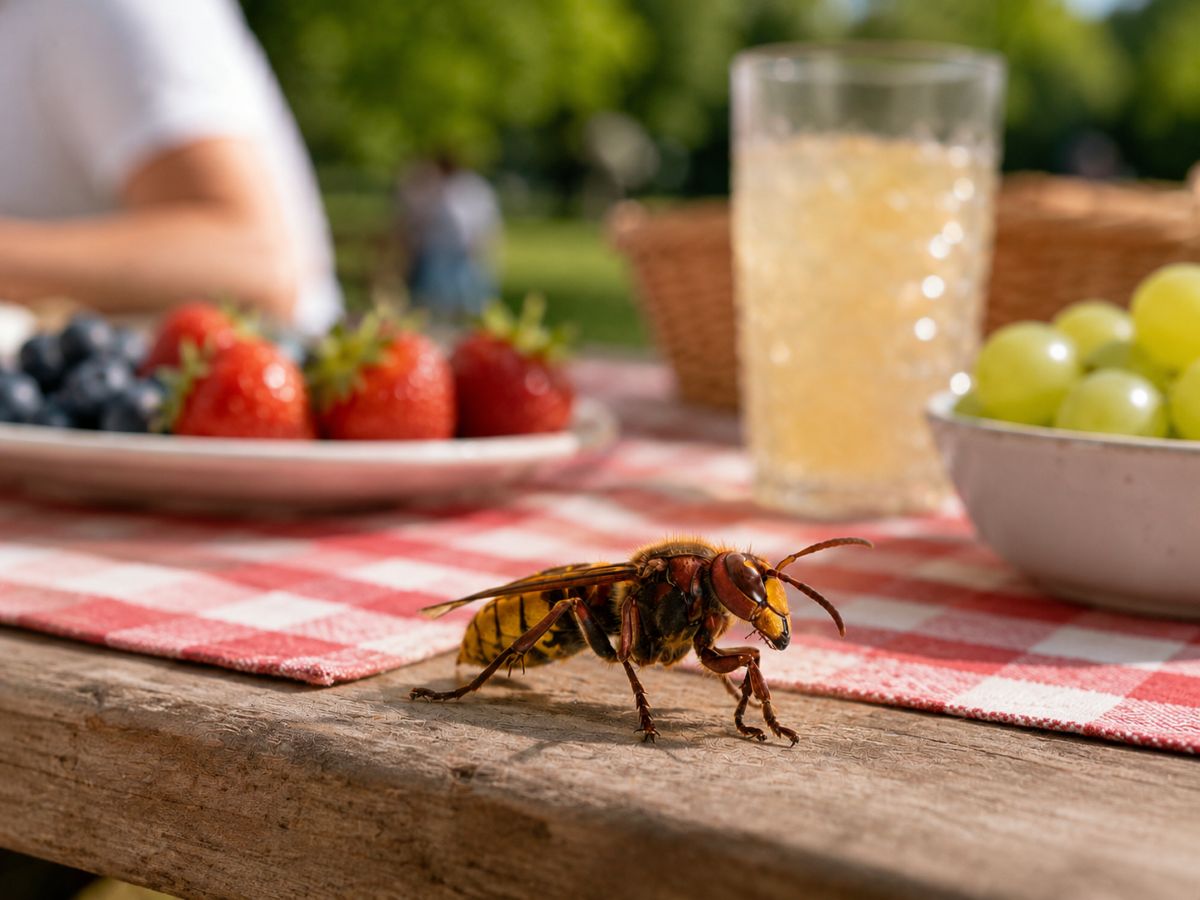
If hornets only occasionally fly through the area, there is usually no reason to intervene. However, if they build a nest immediately beside the home or in a location where they pose a danger to people, the nest should be removed safely as soon as possible.
We recommend:
✔ avoiding the area around the nest,
✔ removing overripe fruit and other food sources,
✔ sealing openings that provide access to attics or other buildings,
✔ using dedicated products for hornet control,
✔ seeking professional pest-control assistance for large or difficult-to-reach nests.
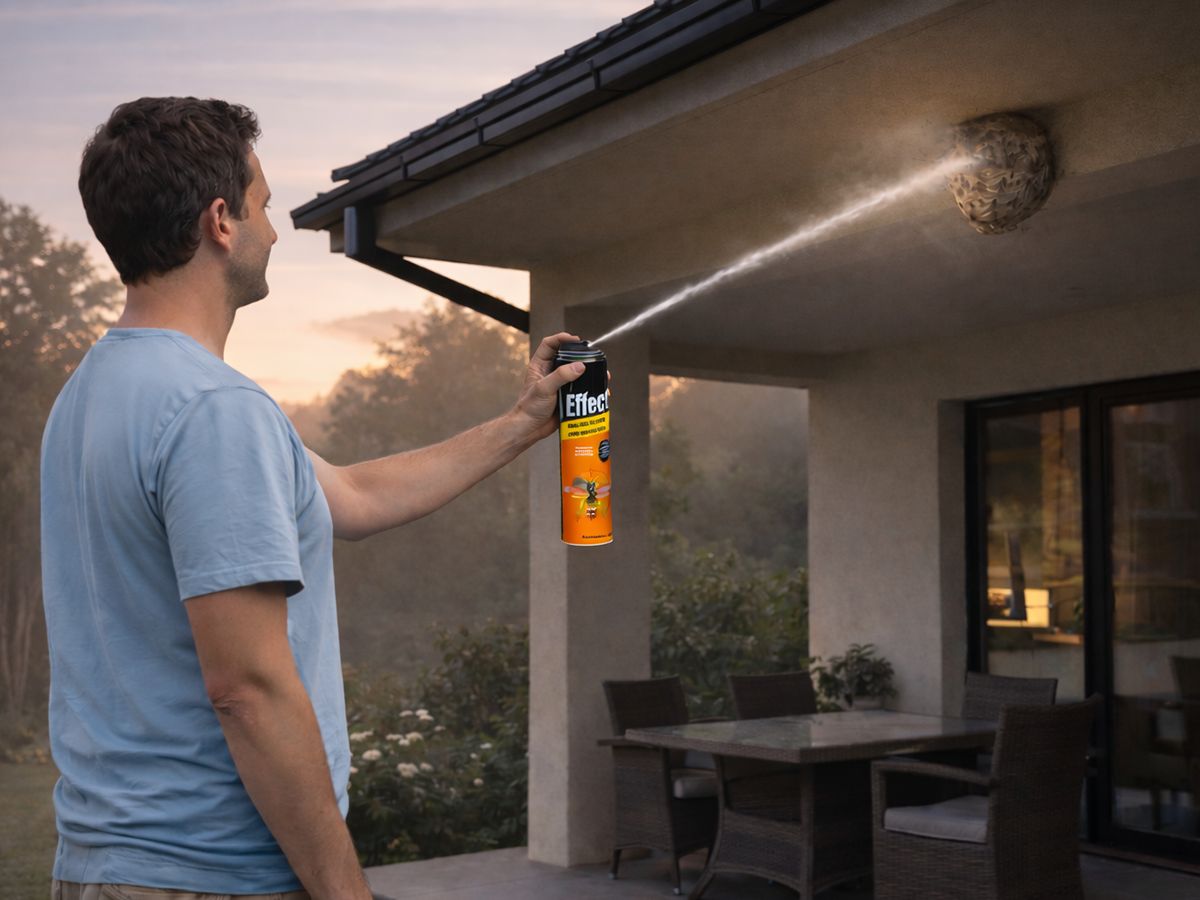
The best time to treat a nest is early in the morning or late in the evening, when most hornets are inside and activity is at its lowest.
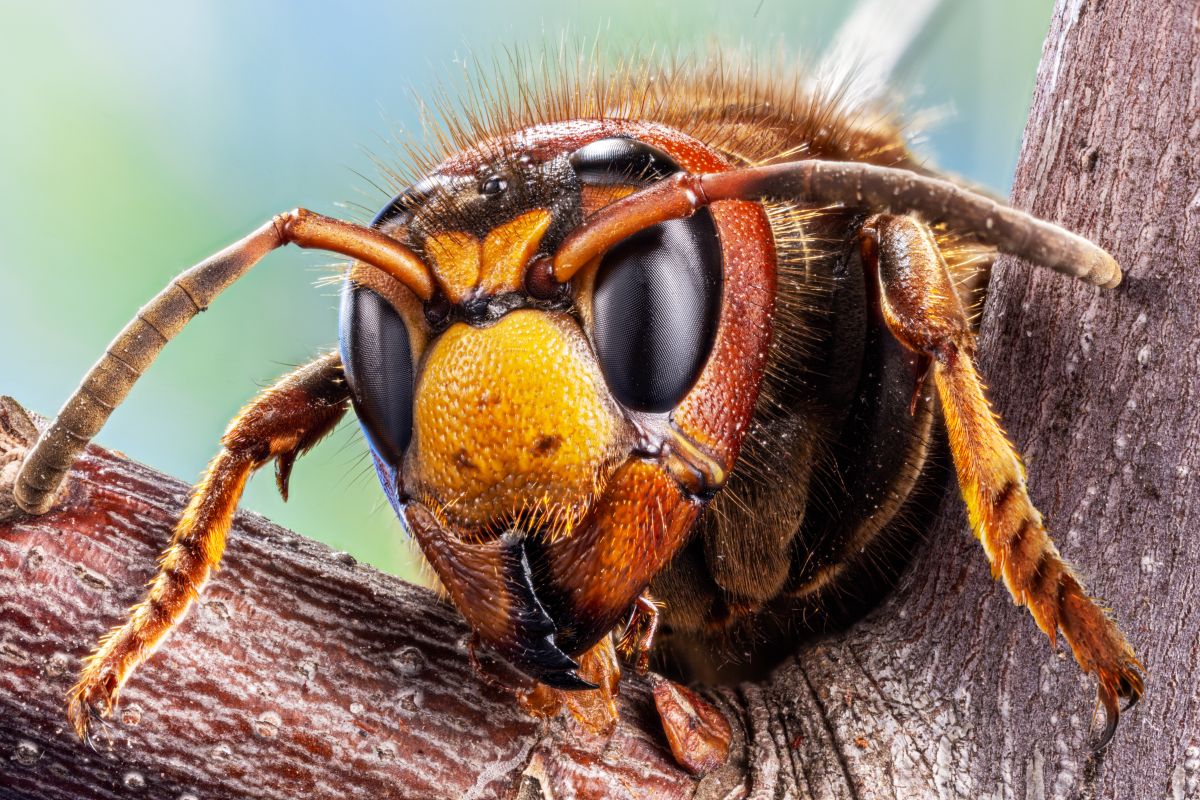
The European hornet is the largest social wasp species in Slovenia. Adults grow to approximately 3.5 centimetres. They build nests in tree hollows, attics, sheds, chimneys and other sheltered spaces. They feed mainly on other insects and therefore play an important role in naturally regulating insect populations.
The Asian hornet originates from Southeast Asia and is an invasive species that has spread across parts of Europe in recent years. It is smaller than the European hornet and can be recognised by its darker body and characteristic yellow-tipped legs. It poses a particular threat to bees and other pollinators.
A hornet is larger than a wasp and has a more robust body with a brownish-yellow pattern. Despite its size, it is generally less aggressive than a common wasp, although it defends its nest very decisively.
A hornet sting is usually more painful because a larger amount of venom may be injected, but it is not inherently much more dangerous than a wasp sting. Allergic reactions and stings to the face, mouth or throat present the greatest risk.
Do not approach the nest or attempt to remove it mechanically. If it poses a risk to people or is located near the home, treat it with a suitable product or contact a professional pest-control service.
No. Hornets are generally not aggressive and do not attack people without a reason. They become dangerous mainly when people approach their nest or try to drive them away.
Regularly inspect attics, garden sheds and other quiet spaces, seal openings through which hornets could enter and remove overripe fruit and other food sources from around the home.
Wasp and hornet nests close to the home can present a serious risk, particularly when disturbed. Learn how to recognise them, when removal is necessary and how to approach treatment as safely as possible.
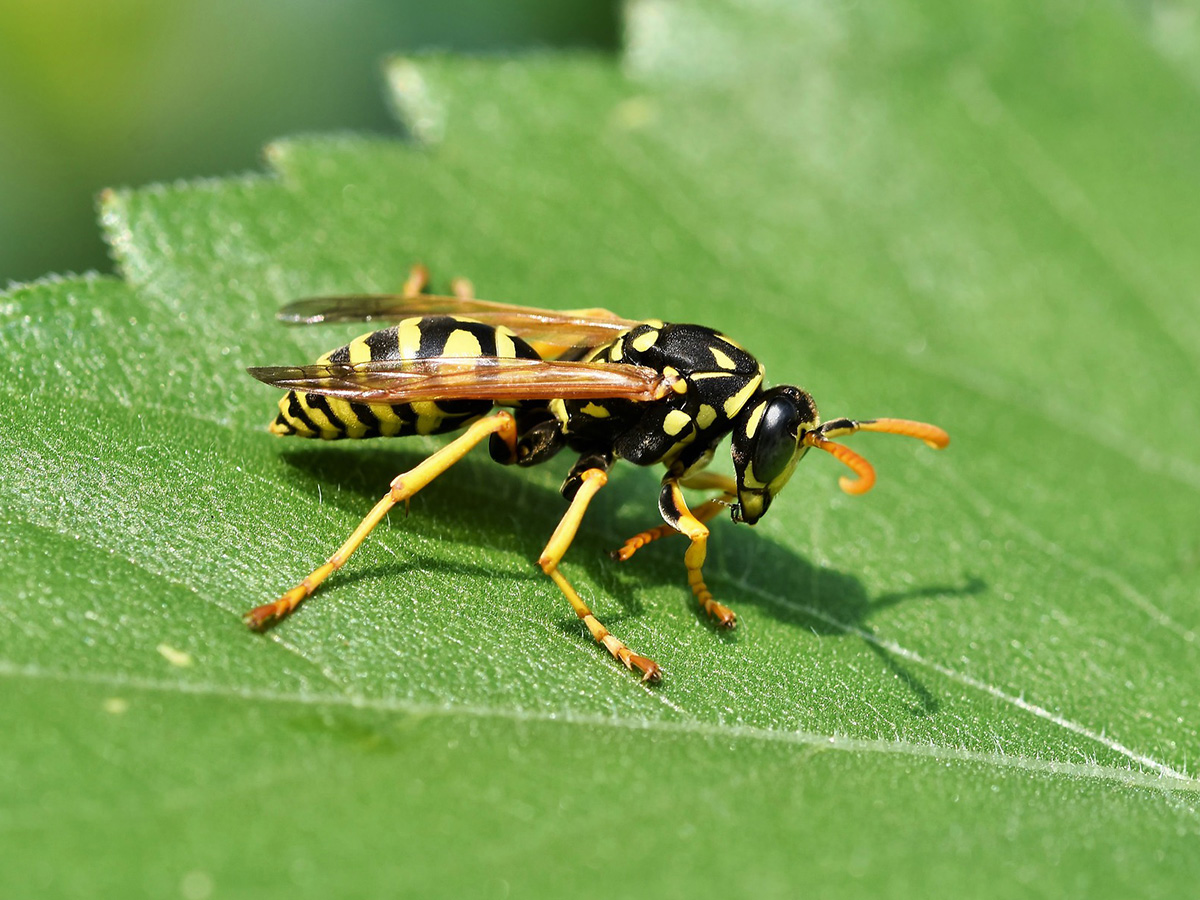
Many people consider wasps to be among the more dangerous and aggressive animals they may encounter and certainly do not want them nearby. A wasp sting can cause very unpleasant skin reactions and, for people with allergies, may even be life-threatening.